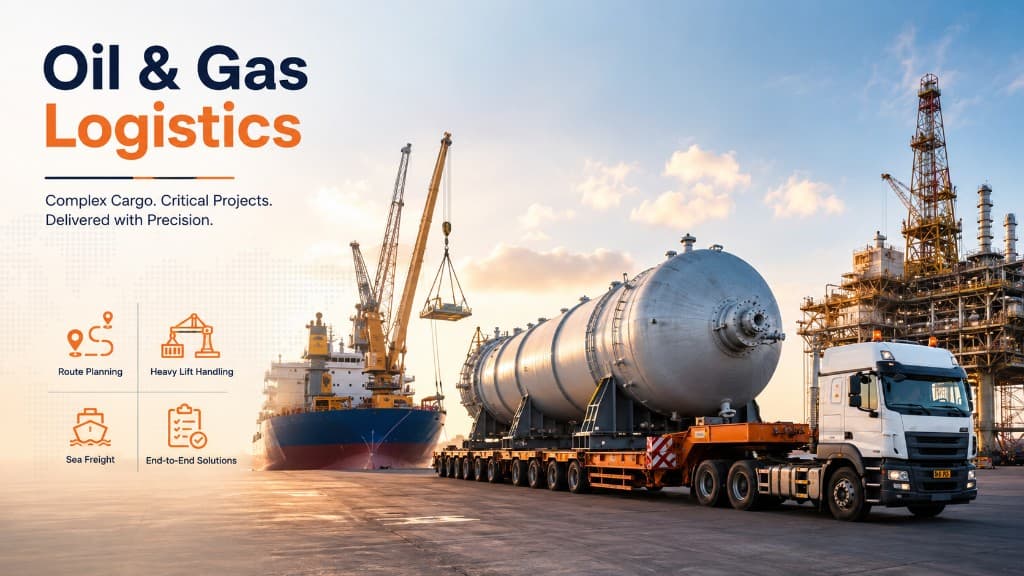
Overview
Oil and gas projects depend on highly coordinated supply chains. Equipment may be sourced internationally, transported by road and sea, transferred through ports and finally delivered to remote project sites. When cargo is oversized, heavy, time-critical or subject to strict regulatory requirements, conventional freight solutions are rarely sufficient.
For EPC contractors, energy companies and project managers, project logistics needs to be planned alongside procurement, engineering and construction schedules. A delay in moving one critical component can affect installation, commissioning and wider project milestones.
At Clarusto Logistics, our experience supporting oil and gas and energy-sector movements has highlighted several recurring logistics challenges.
Moving Heavy and Oversized Project Cargo
Oil and gas facilities require equipment such as machinery, generators, pressure vessels, modules and other industrial components that may exceed standard transport dimensions or weight limits.
These movements require more than simply arranging a suitable vehicle. Route surveys, bridge clearances, turning radii, road conditions, permits, escorts, lifting equipment and loading arrangements may all need to be assessed before the cargo moves.
Our Gas & NGL Facility Supply (Land & Sea) project in Saudi Arabia is a practical example. Clarusto coordinated the movement of heavy machinery and oversized project cargo using specialised trailers, support vehicles, cranes and lifting equipment. Route surveys were completed in advance to identify sharp turns, narrow corridors, bridge clearances and potential bottlenecks.
The project demonstrates why route planning needs to happen before transportation begins, particularly when cargo cannot be moved using standard equipment.
Coordinating Multiple Transport Modes
Oil and gas projects frequently require multimodal transportation. Cargo may move by road from a supplier to an inland port before being transferred to a vessel for international or regional transportation.
Every transfer introduces another potential point of delay.
Cargo must be correctly positioned, documented, handled and secured before the next transport leg begins. Equipment and personnel also need to be available at the right time.
In the Clarusto Gas & NGL project, land and sea transportation were synchronised to maintain continuity between the inland movement, port handling and sea voyage. The project included early positioning of equipment, checklist-controlled documentation and coordinated handovers between transport modes.
This type of coordination is particularly important where project schedules depend on specific vessel, port or site windows.
Accessing Remote and Challenging Locations
Oil and gas facilities are often located away from major transport hubs. Remote locations can present difficult roads, limited infrastructure, restricted access and challenging environmental conditions.
Recent oil and gas project logistics analysis from Maersk highlights remote locations and oversized cargo as significant challenges, noting the importance of scenario planning, specialised equipment, safety procedures and integrated coordination.
For project cargo, reaching the destination country is only part of the journey. Logistics planning must account for the complete route from origin to final project site.
Customs, Permits and Documentation
Cross-border project cargo can involve multiple customs and regulatory requirements. Heavy or abnormal loads may additionally require transport permits and route-specific approvals.
Documentation errors can result in cargo being delayed at borders, ports or terminals, potentially affecting downstream project activities.
The Clarusto Gas & NGL project included documentation and permit management for the land movement, as well as documentation controls during the transition between land and sea transportation. The project also required compliance with applicable Saudi transport requirements.
Early preparation is therefore essential. Customs and transport documentation should be treated as part of the project plan rather than an administrative task at the end of the process. Clarusto’s customs clearance support helps keep regulated project cargo moving.
Dangerous Goods and Maritime Compliance
Oil and gas supply chains can involve hazardous substances and regulated cargo. Depending on the commodity and transport mode, requirements can apply to classification, packaging, labelling, documentation, stowage and segregation.
The International Maritime Organization states that the International Maritime Dangerous Goods (IMDG) Code provides mandatory requirements for the maritime transport of dangerous goods in packaged form under SOLAS Chapter VII. The 2024 edition, incorporating Amendment 42-24, became mandatory from 1 January 2026.
This makes compliance an important consideration when planning maritime movements connected with oil and gas projects. See also our Dangerous Goods Shipping Guide 2026.
Port and Cargo-Handling Constraints
Ports are another critical point in project logistics. Heavy and oversized cargo may require specialised cranes, lifting equipment, suitable vessel capacity and carefully planned loading or discharge operations.
In the Clarusto Gas & NGL project, vessel selection considered oversized loading requirements, while cargo transfers involved relevant lifters, handlers and support vehicles. Safe stowage, inventory accuracy and documentation were also managed throughout the sea transport phase.
Effective port planning can therefore help prevent unnecessary waiting time, additional handling costs and disruption to the project schedule.
Managing Time-Critical Project Schedules
Oil and gas projects often work towards fixed construction and commissioning milestones. A delayed shipment can consequently have an impact far beyond the logistics department.
The answer is proactive project logistics management.
This means identifying critical cargo early, establishing realistic transport schedules, monitoring milestones and preparing alternative solutions where possible. Integrated project logistics providers can also coordinate suppliers, carriers, ports, customs teams and site personnel through a single operational plan.
A Practical Example: Clarusto’s Gas & NGL Facility Project
Clarusto Logistics’ Gas & NGL Facility Supply (Land & Sea) project demonstrates how these challenges can be addressed through coordinated execution.
Working for Dragados Gulf Construction Co. in Saudi Arabia, Clarusto managed a subcontracted movement involving Gas & NGL supply alongside heavy machinery. The project combined specialised land transportation with sea freight and required route surveys, specialised trailers, lifting equipment, permits, documentation control and coordinated port operations.
The movement was completed within the desired duration and without errors, with the project also achieving optimised routing and reduced fuel costs.
Read the full case study: Gas & NGL Facility Supply (Land & Sea).
How Can Oil & Gas Companies Improve Logistics?
Conclusion
Oil and gas project logistics is not simply about transporting equipment. It is about coordinating cargo, routes, transport modes, documentation, customs, safety, ports and project schedules as one connected operation.
The Clarusto Gas & NGL project demonstrates how detailed route planning, multimodal coordination and disciplined execution can help move complex cargo efficiently across land and sea.
For EPC contractors and energy companies, engaging a logistics partner early in the project can help identify transportation constraints before they become costly delays.
Need support with complex oil & gas or project cargo movements? Explore Clarusto Logistics’ freight forwarding, sea freight, land transport, heavy goods handling and customs solutions, or contact us to discuss your project.
Frequently Asked Questions
What are the main logistics challenges in oil and gas projects?
The main challenges include transporting heavy and oversized equipment, accessing remote project sites, coordinating road and sea freight, managing customs and permits, handling dangerous goods, meeting project deadlines and coordinating multiple contractors and logistics providers. Because oil and gas projects often involve critical equipment, a delay in one shipment can affect installation, construction or commissioning activities.
Why is route planning important for oil and gas project cargo?
Route planning is particularly important for oversized and heavy cargo because standard roads may not accommodate the shipment. Bridge clearances, road widths, turning radii, weight restrictions, permits, escorts and site access may all need to be assessed before transportation.
How does multimodal transport support oil and gas logistics?
Multimodal transport allows project cargo to move using a combination of road, sea, air or other transport modes. This can be particularly useful when equipment must travel internationally and then reach a project site that is not directly connected to a major port. The key challenge is coordinating each handover so that documentation, equipment, schedules and handling arrangements remain aligned throughout the journey.
What customs issues can affect oil and gas project cargo?
International project cargo may require import and export declarations, commodity classification, customs procedures, permits, supporting documentation and, depending on the circumstances, temporary import or transit arrangements. Early customs planning helps identify potential documentation or clearance issues before cargo reaches a border or port.