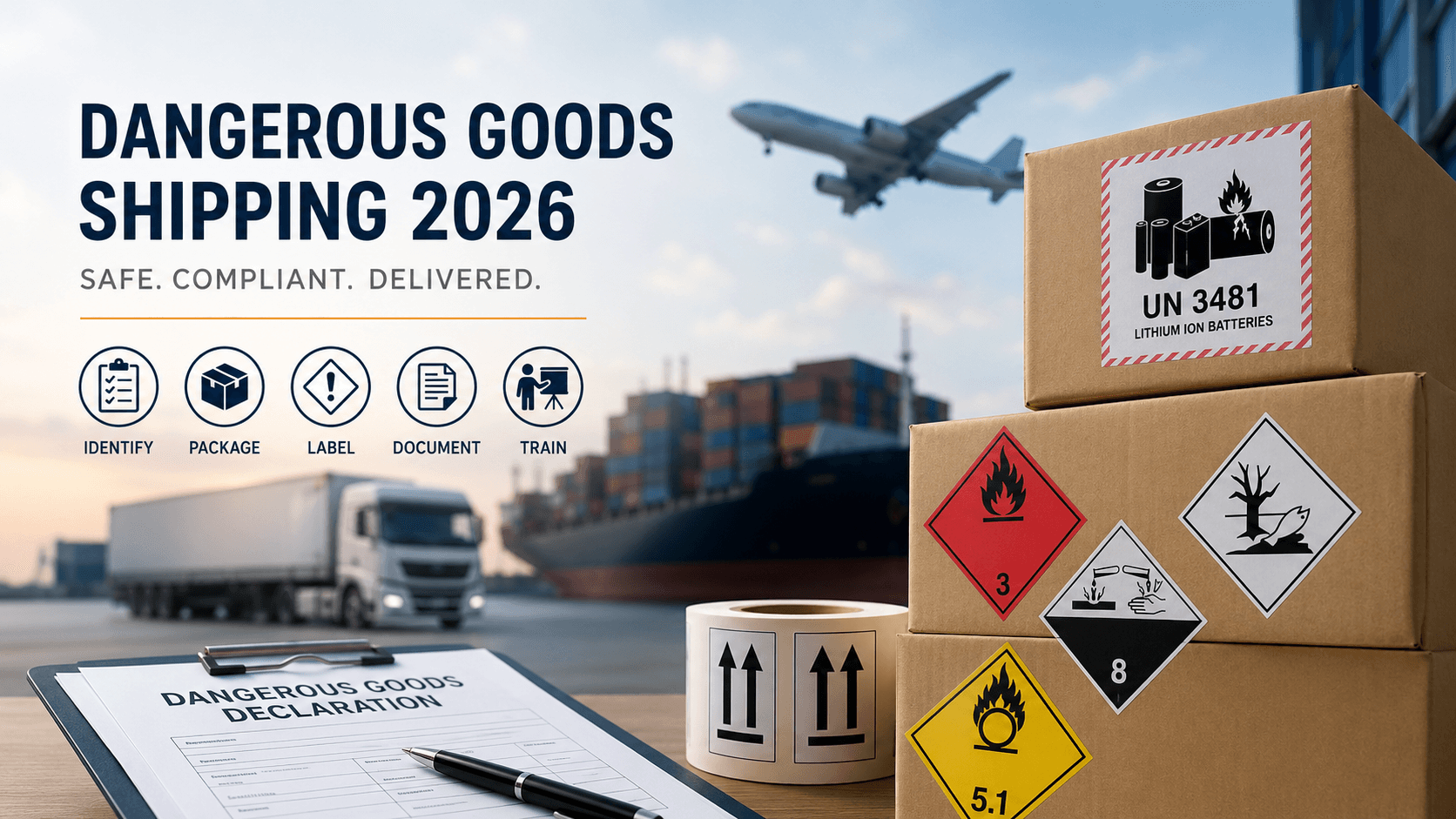
Overview
Transporting dangerous goods is a highly regulated process that demands accuracy, expertise and strict adherence to international standards. From lithium batteries and chemicals to aerosols and industrial gases, these shipments require specialist handling to protect people, property and the environment.
As regulations continue to evolve, businesses involved in domestic and international trade must ensure they remain compliant with the latest requirements. Errors in classification, packaging or documentation can lead to shipment delays, financial penalties, rejected cargo or even safety incidents.
At Clarusto Logistics, we understand the complexities of dangerous goods transportation and work with businesses to coordinate compliant freight solutions across air, sea and road networks. This guide outlines the key principles of dangerous goods shipping in 2026 and the steps organisations can take to minimise risk while maintaining supply chain efficiency.
What Are Dangerous Goods?
Dangerous goods are substances or articles that pose a risk to health, safety, property or the environment during transport. The United Nations (UN) has established an internationally recognised classification system that is adopted by transport regulations worldwide.
Common examples include
Each product is assigned a UN Number, Proper Shipping Name (PSN) and hazard class, which determine how it must be packaged, labelled and transported.
- Lithium batteries
- Paints and solvents
- Flammable liquids
- Industrial chemicals
- Aerosols
- Compressed gases
- Corrosive cleaning products
- Medical and laboratory samples
Key Regulations Governing Dangerous Goods
The applicable regulations depend on the mode of transport.
Road Transport (ADR)
Road movements across the UK and Europe follow the Agreement concerning the International Carriage of Dangerous Goods by Road (ADR), which specifies requirements for packaging, documentation, vehicle equipment and driver training.
Sea Freight (IMDG Code)
Dangerous goods transported by sea must comply with the International Maritime Dangerous Goods (IMDG) Code. The Code provides detailed instructions on packing, segregation, stowage and emergency procedures to reduce risks during ocean transport.
Air Freight (IATA Dangerous Goods Regulations)
Air transport is subject to the IATA Dangerous Goods Regulations (DGR), widely recognised by airlines worldwide. These regulations include stringent rules for packaging, documentation, quantity limits and handling, particularly for lithium batteries and other high-risk materials.
Important Developments in 2026
While the core principles of dangerous goods transport remain unchanged, businesses should be aware of several important developments.
Lithium Battery Requirements
Lithium batteries continue to be one of the most frequently transported—and closely regulated—dangerous goods. Standalone lithium-ion batteries (UN3480) shipped by air generally remain subject to a maximum 30% State of Charge (SoC) unless otherwise approved by the relevant operator or competent authority. This requirement helps reduce the risk of thermal incidents during air transport.
Sodium-Ion Battery Classification
With the growing adoption of alternative battery technologies, dedicated UN Numbers have been introduced for sodium-ion batteries, improving consistency in their classification and transport requirements across international supply chains.
Digital Dangerous Goods Documentation
The logistics industry is gradually moving towards electronic dangerous goods documentation. Initiatives such as IATA DG Digital are helping airlines, freight forwarders and shippers exchange dangerous goods information electronically, reducing paperwork and improving the accuracy of compliance checks. While adoption continues to expand, businesses should confirm digital documentation requirements with their chosen carrier.
Correctly Identify the Product
The first step is determining whether the shipment qualifies as dangerous goods. This information can usually be found in Section 14 of the Safety Data Sheet (SDS), which provides the relevant UN Number, hazard class and packing group.
Incorrect classification is one of the leading causes of shipment delays and regulatory non-compliance. Related reading: understanding commodity codes for UK exporters.
Use Approved Packaging
Dangerous goods must be packed in UN specification packaging that has been tested to withstand conditions encountered during transport. The packaging selected must be appropriate for the substance, quantity and transport mode while preventing leakage or damage.
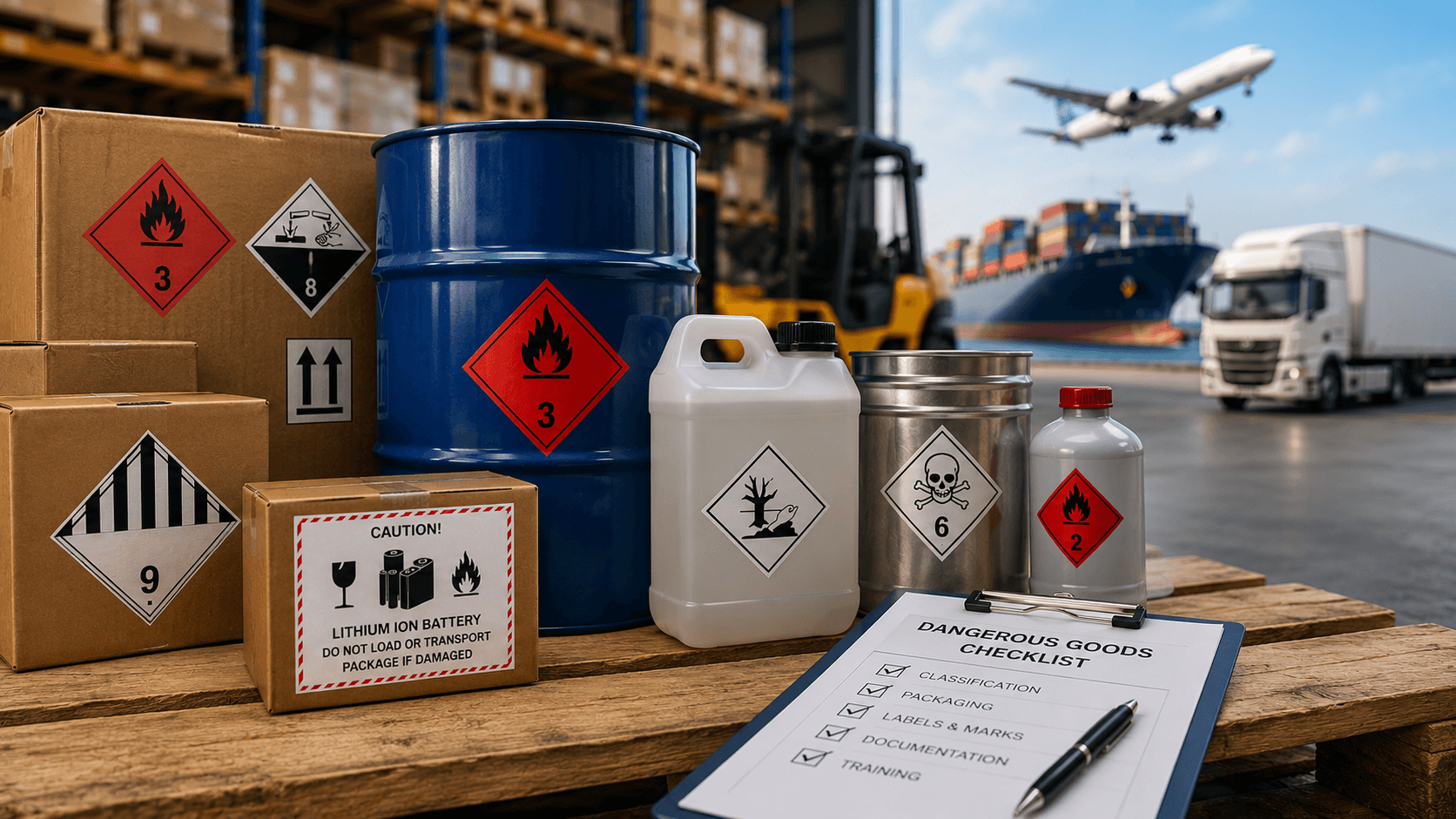
Apply Correct Marks and Labels
Every package must display the appropriate hazard labels, handling marks and UN identification where required. Labels should remain visible, durable and unobstructed throughout the journey to ensure safe handling by carriers and emergency responders.
Prepare Accurate Documentation
Documentation requirements vary depending on the transport mode but may include a Dangerous Goods Declaration, commercial invoice, packing list and emergency response information. Inaccurate or incomplete paperwork can result in cargo being rejected or delayed. Experienced customs clearance support helps keep regulated shipments moving.
Ensure Personnel Are Competent
Employees responsible for classifying, packing, documenting or handling dangerous goods should receive appropriate training relevant to their duties. Organisations must maintain competence through ongoing training and regulatory awareness to meet current international standards.
Common Mistakes to Avoid
Even experienced businesses can encounter compliance issues. Some of the most common mistakes include:
Avoiding these errors not only supports compliance but also reduces the likelihood of costly delays and disruptions.
Why Work with an Experienced Logistics Partner?
Dangerous goods shipments often involve multiple stakeholders, including shippers, freight forwarders, carriers, customs authorities and destination ports or airports. Coordinating these requirements can be complex, particularly for international shipments. See also what a freight forwarder actually does.
- Incorrect UN Number selection
- Using non-approved packaging
- Missing or damaged hazard labels
- Incomplete shipping documentation
- Shipping undeclared dangerous goods
- Failing to follow carrier-specific requirements
An experienced logistics partner can help by
This expertise enables businesses to reduce compliance risks while maintaining reliable supply chain performance.
- Reviewing shipment classifications
- Coordinating compliant transport solutions
- Assisting with documentation requirements
- Managing customs clearance
- Advising on packaging and labelling standards
- Monitoring shipments throughout transit
How Clarusto Logistics Can Help
At Clarusto Logistics, we provide comprehensive freight forwarding solutions tailored to the requirements of regulated cargo. Our services include air freight, sea freight, road transportation, customs clearance, project cargo and international logistics coordination.
Working closely with our clients, we help ensure dangerous goods shipments are prepared in accordance with applicable transport regulations and delivered efficiently across global supply chains. Whether you're moving lithium batteries, industrial chemicals or other regulated cargo, our team is committed to supporting safe and compliant logistics operations.
Final Thoughts
Shipping dangerous goods requires far more than arranging transport. It demands careful planning, regulatory knowledge and meticulous attention to detail at every stage of the supply chain. By understanding the latest requirements, using approved packaging, maintaining accurate documentation and partnering with experienced logistics professionals, businesses can minimise risks while ensuring goods move safely and efficiently.
As global regulations continue to evolve, staying informed is essential. Investing in compliance today not only protects your business from unnecessary delays and penalties but also strengthens customer confidence and supply chain resilience.
Frequently Asked Questions
What are dangerous goods in shipping?
Dangerous goods are substances or articles that can pose a risk to people, property or the environment during transport. They include items such as lithium batteries, flammable liquids, compressed gases, corrosive chemicals and certain medical products. These goods must be transported in accordance with international regulations such as ADR, the IMDG Code and the IATA Dangerous Goods Regulations (DGR).
How do I know if my product is classified as dangerous goods?
The easiest way to determine this is by reviewing Section 14 of the product's Safety Data Sheet (SDS). It provides the UN Number, Proper Shipping Name, hazard class and packing group, which identify whether the product is regulated for transport.
What documents are required for shipping dangerous goods?
The required documentation depends on the mode of transport but may include a Shipper's Declaration for Dangerous Goods (air freight), a Dangerous Goods Transport Document, commercial invoice, packing list and Safety Data Sheet (SDS). Accurate documentation is essential to avoid delays and ensure regulatory compliance.
Can dangerous goods be transported by air?
Yes. Many dangerous goods can be transported by air, provided they comply with the IATA Dangerous Goods Regulations (DGR). Certain products may have quantity limitations or may only be permitted on cargo aircraft.
What is UN specification packaging?
UN specification packaging is packaging that has been tested and certified to meet international performance standards for transporting dangerous goods. It is designed to withstand conditions such as vibration, stacking and impact during transit while reducing the risk of leaks or spills.